Diving into the world of artificial intelligence can feel a bit overwhelming, especially when you start learning about its history. But don’t worry! Understanding the early concepts is a great way to get your feet wet. Back in the 1950s, some really smart folks started to think about machines that could replicate human thought. This was a game changer!
One of the first big ideas was the concept of a machine that can learn. Researchers like Alan Turing proposed that a computer could be trained to mimic human behavior. Turing even created a test, called the Turing Test, to check whether a machine's responses were indistinguishable from a human’s. This was pretty groundbreaking and set the stage for a lot of exciting developments.
Another important idea was the neural network, inspired by how our brains function. These networks are basically layers of interconnected nodes that process information. The thought was that if we could model a machine after our brains, we could significantly boost its ability to learn. It sounds fancy, but it’s just machines trying to get a little smarter by mimicking us!
Early AI researchers also focused on problem-solving. They aimed to create programs that could tackle specific tasks, like playing chess or solving mathematical problems. This was cool because it showed that even if a machine couldn't think like a human, it could still be programmed to excel in certain areas. These early steps paved the way for the AI systems we use today, and they were just the beginning of a fascinating journey.
Key Moments in AI Development
AI has come a long way since its early days, and it's fascinating to see how we got here. One key moment happened in 1956 at the Dartmouth Conference. A group of bright minds gathered, dreaming big about machines that could think like humans. This event is often seen as the birth of AI as a field of study.
Fast forward to the 1970s, when researchers realized the limitations of early programs. They hit a roadblock with what we call "AI winters" — periods when funding and interest in AI slowed down. But this didn’t stop the innovators. They kept pushing forward, and in the 1980s, a new wave of excitement kicked off thanks to expert systems that simulated human decision-making.
Jump to the 2000s, and things really started to heat up. The rise of big data and powerful computers opened up new possibilities. AI began to show real promise in everyday technologies, like speech recognition and image processing. You know those voice assistants that can answer your questions? They owe a lot to the breakthroughs during this time.
Today, we’re seeing AI everywhere, from personalized recommendations on your favorite streaming service to smart home devices that make life easier. Innovations like deep learning and neural networks have brought us to a place where AI can learn and adapt faster than ever. Each step in this journey has shaped the tech we rely on today.
Notable Figures in AI Evolution
When diving into the history of artificial intelligence, a few key figures really stand out. These pioneers laid the groundwork for much of what we see in AI today. Let’s take a look at some of them and their contributions!
First up is Alan Turing. You might have heard of the Turing Test—this brilliant mind came up with it! The test measures a machine's ability to exhibit human-like intelligence. Turing’s ideas, especially during the 1950s, shaped early thoughts about machines thinking for themselves.
Next, we have John McCarthy, who’s often called the father of AI. In the 1950s, he coined the term “artificial intelligence” and organized the famous Dartmouth Conference in 1956, which is considered the birth of AI as a field. McCarthy’s work focused on giving machines the ability to reason and learn.
Don’t forget about Marvin Minsky! He co-founded the MIT AI Lab and was involved in countless projects that pushed the boundaries of what AI could do. Minsky believed in teaching machines to solve problems like humans do, which led to groundbreaking advancements in neural networks and robotics.
Lastly, let’s mention Ada Lovelace. Known as the first computer programmer, her early work in the 1800s laid the foundation for computing machines. Lovelace’s vision of using machines for more than just calculations was way ahead of her time, and her insights have influenced AI development ever since.
The Future of Artificial Intelligence
AI is getting better at learning from experience. This means it can help with everything from making personalized recommendations for shows to predicting issues before they happen in industries like healthcare or finance. Think of AI as a super-smart buddy who gets to know you better over time.
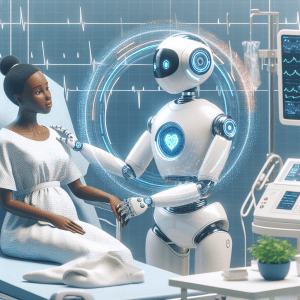
We’re also seeing advancements in AI working with robotics. Picture robots that can do household chores or even assist in surgeries. These developments could open up a world of convenience and improve our quality of life. AI isn’t just about making things faster; it’s about making them safer and more efficient, too.
As AI continues to grow, we need to think about how we want to shape its role in society. How do we ensure it benefits everyone? Dialogue about ethics and responsibility is just as important as the tech itself. The conversations we have today will help guide how AI works for us tomorrow.